
Press release syndication means your announcement is published once and then republished or picked up by other websites, news outlets and aggregators, so more readers and journalists see it. It widens your reach, but it doesn't guarantee coverage. The businesses that get value from it pair it with a real news angle, the right categories and a little direct outreach. This guide explains how syndication works, what it costs, how to measure it and when to choose something else.
TL;DR
- Syndication republishes one release across a network of sites. Distribution is the wider job of getting news to the right people, and syndication is one part of it.
- It buys visibility and a permanent, searchable copy of your news. It does not buy guaranteed pickup by journalists.
- Treat it as one layer in a plan: a strong story, a syndicated release, then personal follow-up to the few reporters who matter.
- Judge results by pickups, referral traffic, branded searches and enquiries, not by the number of sites a release appears on.
- A single release on News Today costs $39, so you can test the approach on one announcement before committing more budget.
Table of Contents
- What press release syndication actually means
- How syndication works, step by step
- Where a release can appear in Australia
- What syndication can and can't deliver
- How to plan a syndication strategy
- Writing a release that syndicates well
- What it costs, and whether you can do it free
- How to measure whether it worked
- Alternatives to a traditional newswire
- Our perspective
- Publish your release with News Today
- A short checklist before you publish
- FAQ
- Sources
What press release syndication actually means
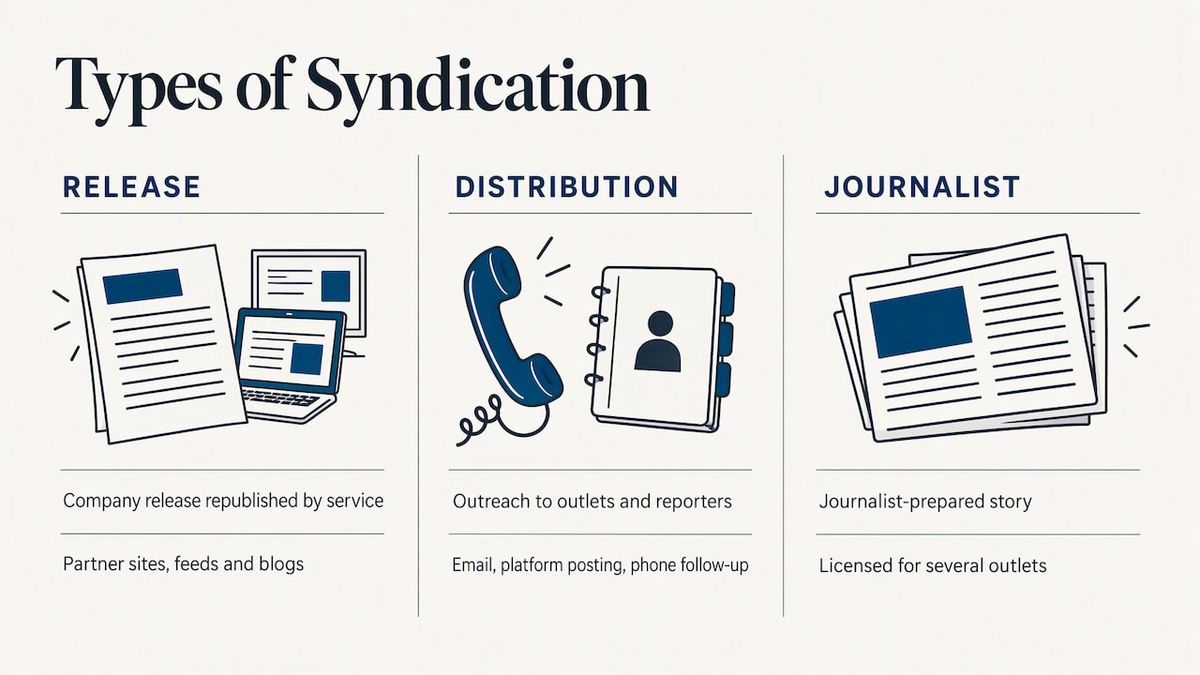
The phrase is used loosely, and that causes confusion. Three different things sit under it.
Syndication of the release. You publish a release through a service, and that service republishes it on partner sites, news feeds and blogs. This is what most people searching for the term want, and it is the sense used in this guide.
Distribution. This is the broader process of getting news in front of the right outlets and reporters. It can include emailing a media list, posting on a platform, and following up by phone. Syndication is one channel inside it.
Journalist syndication. This is a different idea altogether. In the news industry, syndication can mean a single journalist prepares a story and shares it across a network of outlets, which Streem describes as sharing the rights to a story so several outlets can use it. When a reader asks what it means for a journalist to be syndicated, this is the answer. It is editorial content licensed between publishers, not a company announcement pushed out by its author.
A press release also isn't a feature article. It is a proactive announcement. The NSW Government's media policy describes a media release as a tool for proactive media announcements, and notes that one may sometimes be given to a single reporter ahead of time as an exclusive before it goes public. That detail matters later, because an exclusive and a mass syndication pull in opposite directions.
How syndication works, step by step
The mechanics are simple, which is why the quality of the story decides almost everything.
- You write and submit the release. A good one has a news headline, a lead paragraph that answers who, what, when, where and why, a quote, supporting facts and a contact for media.
- The platform reviews it. Reputable services check releases for accuracy and tone before publishing. On News Today, review takes place on an instant or 24 to 48 hour basis, and our editorial standards apply to every submission.
- The release goes live on the platform. It becomes a permanent page with its own address, which search engines can index.
- It is syndicated. The service pushes the release into its distribution channels: category pages, feeds, partner sites and media lists.
- Pickup is up to others. Journalists, bloggers and aggregators decide whether to use it. Some will copy it, some will quote it, and many will never open it.
Two features make a real difference to how far a release travels. The first is category targeting: a release about a new accounting app is filed under business or technology, not lifestyle, so the people who browse those sections see it. The second is media-rich content. Images, a logo, a short video or a link to a downloadable asset make a release easier for an editor to reuse.
Where a release can appear in Australia
The places a syndicated release can land fall into a few types. Knowing them helps you set honest expectations.
| Type of destination | What you get | Typical limit |
|---|---|---|
| The distribution platform's own site | A permanent, indexable copy with your links and media | Only as strong as the platform's own audience and standing |
| Partner news sites and aggregators | Extra copies and a wider footprint | Often low-traffic, and many apply a nofollow attribute to links |
| Media lists and journalist inboxes | A chance of pickup by working reporters | Reporters receive a great deal of email, so most releases go unread |
| Industry and trade publications | Pickup by an audience that cares about your sector | Usually requires a clear fit and a real news angle |
| Social and search discovery | Long-tail visibility months later | Depends on headline wording and search relevance |
A release on a syndication service is not an advertisement on a mainstream news site. Be wary of any promise that implies it will appear on the homepage of a major masthead. Placements like that come from editors who choose to run a story, not from a fee.
What syndication can and can't deliver
This is the part many sales pages skip.
What it reasonably delivers
- A credible, citable record of your announcement on a third-party site.
- Search visibility for your company name and the topic of the release, sometimes for a long time after publication.
- A convenient link to send to journalists, partners, investors and customers.
- Occasional pickup by a niche outlet, blog or newsletter that you did not know about.
What it doesn't guarantee
- Coverage in a named newspaper, broadcaster or website.
- Ranking improvements from backlinks. Links inside syndicated copies are often marked in a way that passes little or no ranking credit, so treat any SEO value as indirect: brand searches, referral visits and the occasional editorial link that follows real coverage.
- Sales. A release creates awareness and credibility. Whether that turns into revenue depends on what you do with the traffic.
It is also worth hearing the sceptics. The SEO Company's digital PR guide argues that modern digital PR puts personal outreach to relevant journalists ahead of broad, automated wire distribution, and calls the wire a poor substitute for targeted outreach if genuine exposure is the goal. We think that's a fair warning against treating syndication as the whole plan. It doesn't mean syndication is useless. It means it works best as the foundation under outreach, not instead of it.
How to plan a syndication strategy
A strategy is a short list of decisions made before you pay for anything.
1. Decide what the release is for
Pick one primary goal: brand awareness, a launch, a funding announcement, a hire, an event, a community result. A release that tries to do five things reads like an advertisement, and editors delete those quickly.
2. Check that it is news
Ask three questions. Is something new? Is it relevant to a defined audience? Is there a fact, figure or person that a reporter could quote? If the answer to all three is no, write a blog post instead.
3. Match the release to the audience
Here is how different organisations tend to use syndication.
- Small and medium businesses use it for launches, new locations, awards and partnerships. The permanent page also gives local customers something to find when they search your name.
- Startups use it to build a first layer of third-party mentions. Investors, recruiters and early customers often check whether anyone outside the company has written about you.
- PR agencies use it to give every client a repeatable, low-cost baseline, then reserve bespoke outreach for the stories that deserve it. Buying credits in bulk suits an agency that publishes often.
- Nonprofits use it for impact results, campaign launches and fundraising milestones, where a clear human story and a number travel well.
4. Choose the timing
Publish when the news is fresh, and avoid sending a release on the same day as a major national story that will crowd out everything else. If you plan to give one reporter an exclusive, do that first, and syndicate after the embargo lifts. The exclusive and the wide release shouldn't compete.
5. Plan the follow-up
Syndication gets the release into circulation. Follow-up decides whether anyone reads it. Choose five to ten reporters or newsletters that actually cover your topic, then send each a short, personal note that links to the release. If you want to understand why this approach holds up against broad blasting, comparing broad wire distribution with pitching journalists directly is a useful way to see where each fits in a wider content and visibility plan.
Writing a release that syndicates well
Syndicated copies are read out of context, often with no logo and no surrounding site. The text has to stand alone.
- Headline: state the news in plain words, under about 90 characters, with the company name and the key fact. Skip hype words like revolutionary or game-changing.
- First paragraph: put the who, what, when and where up front. A reader who stops here should still know the story.
- Quote: one useful quote from a named person, saying something that isn't obvious.
- Facts: use specific numbers, locations and dates. Vague claims invite deletion.
- Local angle: if you operate in Australia, name the city or state. Regional editors look for this.
- Boilerplate and contact: a two-sentence company description and a real person with a phone number and email.
- Media: add a good image and a logo. Releases with usable images are easier for others to republish.
For a sense of how real releases are structured, you can browse published examples such as Petaflo's AI automation announcement or ServiceTasker's local business meet-up story. Notice how each leads with the specific news and keeps promotion in the background.
What it costs, and whether you can do it free
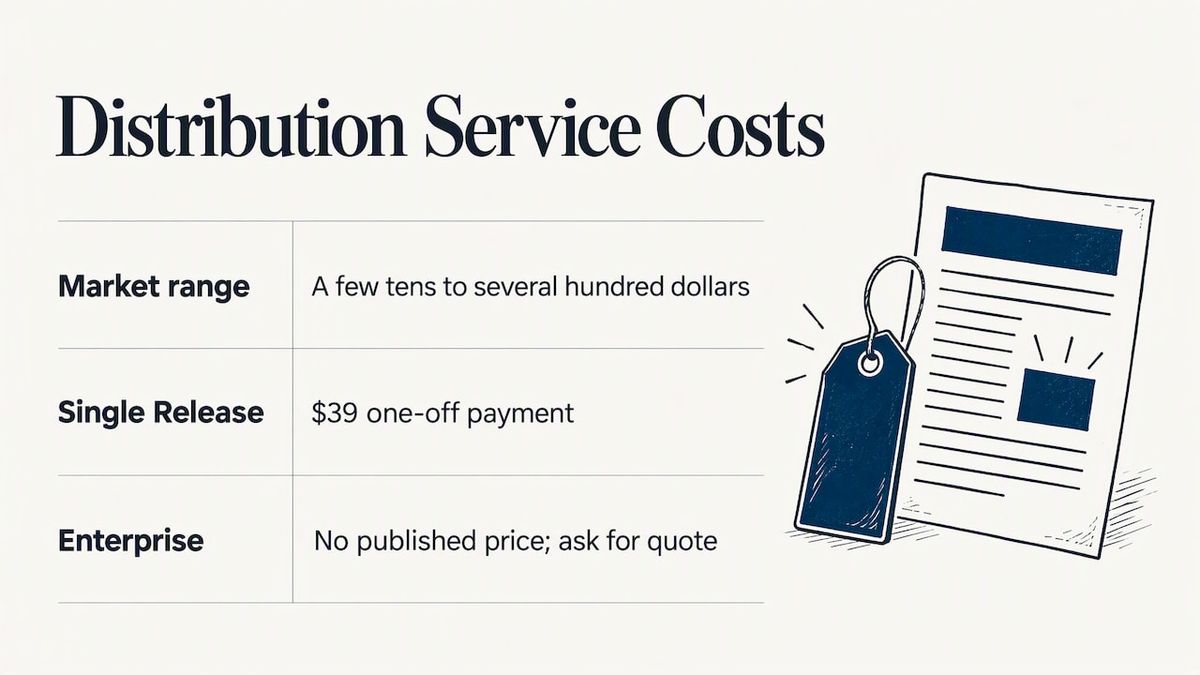
Prices for distribution services vary widely, from a few tens of dollars for a single posting to several hundred dollars for packages that bundle partner placements. At the top end, enterprise wire services price by reach, industry targeting and extras, and often by quote.
On News Today, the published price is simple. A Single Release costs $39 as a one-off payment. Custom and enterprise solutions are available for larger needs, and that offer has no published price, so you'd ask us for a quote.
Can you distribute a press release for free? Partly. You can post it on your own website's news page, share it on LinkedIn and other social channels, and email it to journalists you already know. Free release-posting sites exist too, but they tend to have small audiences, little review and weak credibility. What you pay for with a reputable paid service is editorial review, a stable page that stays online, structured categories and a distribution channel. Whether that is worth $39 depends on how much a credible third-party record is worth to your business. For most announcements, it's a small cost compared with the time spent writing the release.
Does it cost money to submit a release? On a paid platform, yes. Expect payment at submission, and be cautious about any service that charges a high fee but refuses to say where releases appear.
How to measure whether it worked
Counting the number of sites that carry your release is the weakest measure available. Syndicated copies on low-traffic pages inflate the count without adding readers. Better measures:
- Pickups. Search your headline in quotes and your company name a week and a month after publishing. Note every outlet that quoted or rewrote it, and every reporter who replied.
- Referral traffic. In your analytics, check visits from the platform and from other sites that link to the release. Use tagged links to separate release traffic from everything else.
- Branded search. Watch searches for your company name in Google Search Console around the publication date.
- Enquiries. Add a unique phone number, landing page or discount code to the release, so leads can be traced to it.
- Editorial links. Note any real link from a news or trade site that follows from the release. These are the links that carry value.
- Engagement on the platform. Premium News Today users get performance tracking so they can see engagement metrics and refine the next release.
Set a baseline before you publish. Without it, you can't tell whether anything changed.
Alternatives to a traditional newswire
If a large, paid wire service is more than you need, or you want more control, several options sit beside it. They are different in kind, so choose by goal.
| Alternative | Best for | Trade-off |
|---|---|---|
| Direct journalist outreach | Stories with a clear fit for a specific reporter | Takes time and relationships, and results are unpredictable |
| Digital PR campaigns | Earning editorial coverage and links with data, research or a strong angle | Needs creative effort and often an agency or specialist |
| Lower-cost, pay-per-release platforms | Steady announcements, startups and nonprofits on tight budgets | Smaller footprint than the largest wire services |
| Your own newsroom page and owned channels | Customers and existing audiences | No third-party credibility on its own |
| Trade association and industry newsletters | Reaching a defined professional audience | Gatekeepers decide, and timing is fixed |
The SEO Company's digital PR advice lists personal journalist outreach and digital PR campaigns among the routes to editorial coverage on news and trade publications. In practice the best results usually come from combining two: a low-cost syndicated release that gives the story a permanent home, plus targeted outreach to the handful of people who can run it.
Our perspective
We built News Today around a plain observation: most organisations don't need an expensive wire contract to announce ordinary good news. They need their release published quickly, reviewed so that it reads as credible, and kept online in a form that search engines and journalists can find.
That's why we pair instant posting with editorial review, and why we price a single release openly. We'd rather you test one announcement and see for yourself than sign up to a bundle on faith.
We also think syndication gets oversold. No service, ours included, can promise a particular newspaper will run your story. What we can do is give your news a credible home, categorise it properly, put it in front of media outlets and readers, and give premium users the analytics to learn from each release. The rest is the story itself, and the follow-up you do. A release with real news, a named quote and a good image beats one with a bigger distribution list almost every time.
— Matthew
Publish your release with News Today
If you have news ready to go, you can submit your press release and have it reviewed for publication. A Single Release is $39, and agencies or frequent publishers can ask about bulk credits and custom and enterprise solutions. Your release is posted on the platform, optimised for search, and sent out to journalists and media outlets across Australia and beyond.
A short checklist before you publish
- The headline states the news, not the brand slogan.
- The first paragraph works on its own.
- There is at least one named quote and one specific number.
- Images and the logo are attached.
- Contact details belong to someone who will answer.
- You have a list of five to ten reporters to follow up with.
- You know which metrics you'll check, and when.
FAQ
What is the difference between press release syndication and distribution?
Distribution is the whole process of getting your news to the people who should see it, including emails, calls and posting. Syndication is the republishing of a release across a network of sites and feeds. Most services combine both, but only distribution includes personal follow-up.
Does press release syndication help SEO?
Only indirectly. Links in syndicated copies are often marked so they pass little ranking credit, but a well-written release can earn brand searches, referral visits and sometimes editorial links from outlets that pick up the story. The permanent page also helps people find your news by searching your company name.
How can I distribute a press release for free?
Post it on your own site, share it on social channels such as LinkedIn, and email it to journalists who cover your topic. Free posting sites exist, but their reach and standards vary a lot. A paid service adds editorial review and a stable, indexed page.
How do I know if syndication worked?
Set a baseline first, then check pickups, referral traffic, branded searches and enquiries a week and a month after publishing. Use tagged links or a dedicated landing page so you can attribute visits. The number of sites carrying the release is the least useful measure.
Which service is best for distributing press releases?
The best choice depends on your goal and budget. Compare where releases appear, whether there is editorial review, how pricing works, and what reporting you receive. For announcements from small businesses, startups, agencies and nonprofits, we think a fast, reviewed, pay-per-release service such as News Today at $39 per release is a sensible place to start.
Sources
- NSW Government media policy
- Streem: what content syndication in media means
- The SEO Company: digital PR for SEO