
Press release distribution in Australia can cost as little as a few dozen dollars for a single online release, or run into the thousands once you add writing, targeted media lists and agency time. The number on the checkout page is rarely the whole bill. What you actually spend depends on three things: who writes the release, how widely it is pushed out, and whether anyone helps you get journalists to read it.
This guide breaks the cost into those parts, explains the main pricing models, and gives you a way to decide whether a fee is fair for what you are getting. We publish press releases for a living, so where we mention our own price we say so plainly.
TL;DR
- Distribution, writing and PR strategy are three separate costs. Most confusion about price comes from mixing them up.
- A two-page media release written by a professional costs AUD$400 to $500 according to an Australian pay-rates report, so writing can cost more than distribution.
- Pay-per-release, bulk credits, subscriptions and custom enterprise packages are the four models you will meet. Match the model to how often you publish.
- Our Single Release is $39 one-off, with custom and enterprise packages available on request.
- Judge a fee by inclusions and audience: editorial review, SEO visibility, category targeting, media list delivery and reporting.
Table of Contents
- The three costs inside "press release cost"
- What distribution typically costs
- What changes the price
- Pricing models you will meet
- Writing and agency costs on top
- How to judge whether a fee is fair
- Three realistic budgets
- Getting more from a fixed budget
- Publish with News Today
- FAQ
- Sources
The three costs inside "press release cost"
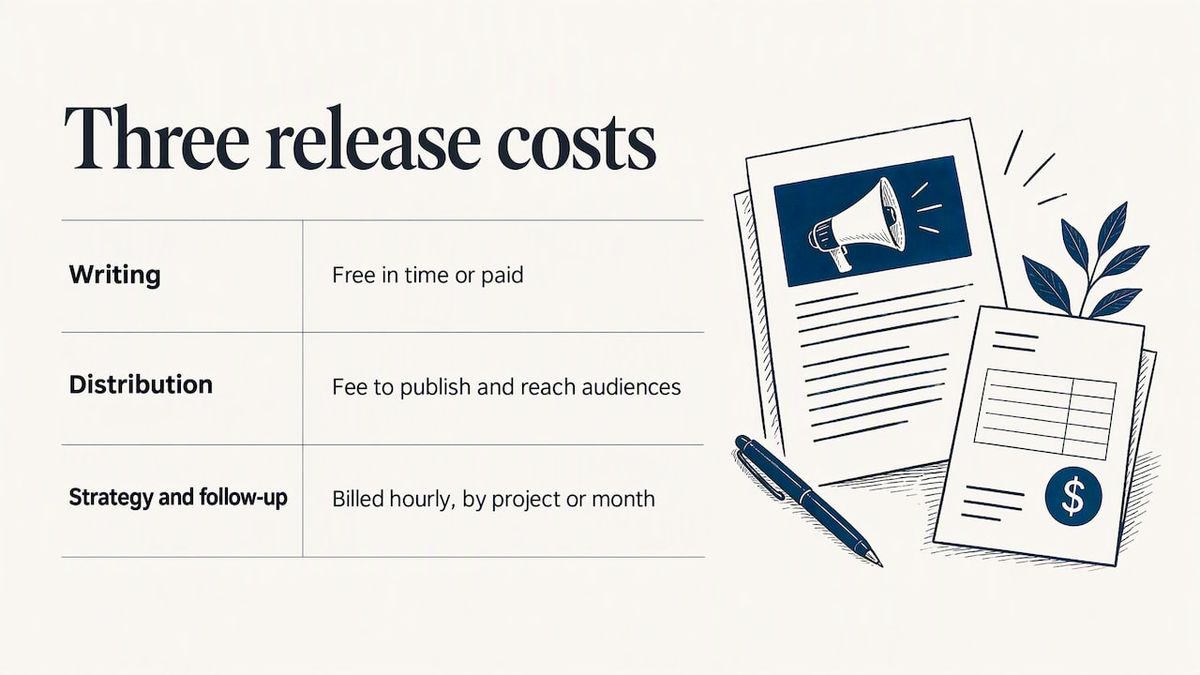
When people search for what a press release costs, they are usually lumping together three different purchases.
1. Writing. Someone has to turn your news into a clear, factual release with a headline, a lead paragraph, a quote and contact details. You can write it yourself for free in time, or pay a freelancer, a writing service or an agency.
2. Distribution. This is the fee to publish the finished release and push it to audiences: a news site, search engines, media lists, journalists' inboxes. Distribution is where the model and the reach change the price most.
3. Strategy and follow-up. Pitching individual journalists, arranging interviews and running a campaign around the news. This is agency or consultant territory and is billed by the hour, the project or the month.
A business that already has a good release in hand only needs the second item. A business starting from nothing may need all three. Compare quotes like for like: a $39 distribution fee and a $1,500 "press release package" are not competing for the same job if the second one includes writing and follow-up.
What distribution typically costs
Distribution pricing spreads across a wide range, and it is easiest to think of it in tiers rather than a single average.
| Tier | What you generally get | Who it suits |
|---|---|---|
| Online publication only | Your release goes live on a news site, indexed by search engines, often with editorial review | Startups, small businesses, nonprofits, routine announcements |
| Targeted distribution | Release plus category or region targeting and delivery to a media list | Product launches, local events, industry news |
| Premium wire-style distribution | Large paid syndication across many outlets, sometimes with multicultural or international reach | Listed companies, major launches, crisis or investor communications |
The more audience-targeting and syndication a package promises, the higher the fee. Entry-level online publication sits at the low end, and premium wire services sit well above it. Prices across providers change often, so confirm the current figure on each provider's own pricing page before you budget.
If you want to understand how syndication reaches other sites after publication, our practical guide to press release syndication in Australia covers how it works and what it can and cannot guarantee.
What changes the price
Four factors explain most of the difference between a cheap release and an expensive one.
Reach and audience
A release published for an Australian readership costs less to distribute than one pushed to international outlets, and less again than one translated for multicultural media. Ask what "reach" means in the quote: is it a count of outlets, a list of named publications, or a promise of guaranteed pickup? Nobody can honestly guarantee that a journalist will write about your news. What a fee can buy is access, visibility and a good chance of being seen by the right people.
Targeting and media lists
Category targeting sends your release to people interested in your industry, such as technology, education, health or motorsport. Media list delivery puts it in front of journalists who cover that beat. Both add value because a relevant ten journalists beat an irrelevant thousand. Both also add cost, because someone maintains those lists.
Editorial review and turnaround
Some services publish instantly and others review every submission first. Review slows things down, usually by a day or two, but it protects credibility: a release that sits beside obvious spam is less likely to be trusted by readers or picked up by journalists. If your news is time-sensitive, check how long review takes before you pay.
Add-ons
Images, video, extra links, logos, SEO optimisation, reporting dashboards and writing help are often sold separately. A low headline price can climb quickly once you tick the boxes you actually need. Media-rich submissions matter more than most people expect, because journalists and readers respond better to a release with a usable photo and a clear link to more detail.
Pricing models you will meet
Pay per release
You pay each time you publish. It suits businesses that announce news a few times a year, since you never pay for capacity you do not use. It is also the simplest model to budget for: one release, one fee.
Bulk credits
You buy a bundle of releases up front at a lower unit price. This tends to suit PR agencies managing several clients and in-house teams with a regular news calendar. The trade-off is that you commit money before you know how many releases you will need, so check whether credits expire.
Subscriptions
Monthly or annual plans bundle a set number of releases and extras. Some are based on a 12-month contract, so read the term and the cancellation conditions. Subscriptions suit organisations with a steady stream of news. If you only publish twice a year, a subscription is paying for idle capacity.
Custom and enterprise packages
Large organisations, institutions and agencies with unusual needs, such as multiple approvers, branded reporting or heavy volume, usually negotiate a package. There is no list price because the scope varies, so you ask for a quote against a written list of requirements.
Writing and agency costs on top
Distribution is often the smaller part of the bill. Australian pay-rate data from Rachel's List 2025 pay rates report reports that a two-page media release costs AUD$400 to $500, that PR campaigns start from $2,000 and above, and that PR retainers start at $2,500 per month.
Those figures are useful as a sanity check:
- If you pay a professional to write a release, expect the writing to cost several times more than distribution on an entry-level platform.
- If you hire an agency for a campaign, you are buying relationships, strategy and follow-up, not just a release.
- Writing it yourself costs time rather than cash, and a clear, factual release is well within reach for most owners if you follow a good structure.
If you are writing in-house, these guides show how to structure a release for a specific kind of news: an app launch press release, an award press release or an education press release. Then you only pay for distribution.
Do not forget GST
If you are comparing quotes from Australian suppliers, check whether each price includes or excludes GST. GST is a broad-based tax of 10% on most goods and services sold or consumed in Australia, and quotes are sometimes shown ex GST. A $500 quote and a $500 plus GST quote are different amounts. If your business is registered for GST, you can generally claim credits for the GST included in the price of what you buy for the business, so confirm the treatment with your accountant.
How to judge whether a fee is fair
A price is only high or low relative to what it includes and who it reaches. Run any quote through these five checks.
- What exactly is published, and where? A live, indexable page on a real news site is worth more than a vague promise of "distribution to thousands". Ask to see an example release.
- Who sees it? Look for category targeting, a stated geographic reach and media list delivery. Match these to your actual audience: a Perth dental clinic does not need international wire coverage.
- Is there editorial review? Standards protect every release on the platform, including yours.
- Will it keep working? SEO-optimised pages continue to attract search traffic long after the announcement day. A release that disappears after a week gives you less for the same money.
- Can you measure it? Reporting on views and engagement lets you see which releases work and refine the next. Our guide to press release analytics explains what to track and how to report it.
Two warning signs are worth knowing. The first is a guarantee of media coverage: no honest distributor can promise that journalists will write about you. The second is a low price that hides necessary features behind extra charges, so ask for the total for the features you need.
Three realistic budgets
These examples show how the pieces combine. The writing and agency figures come from the pay-rates report above, and the distribution figure is our own published price.
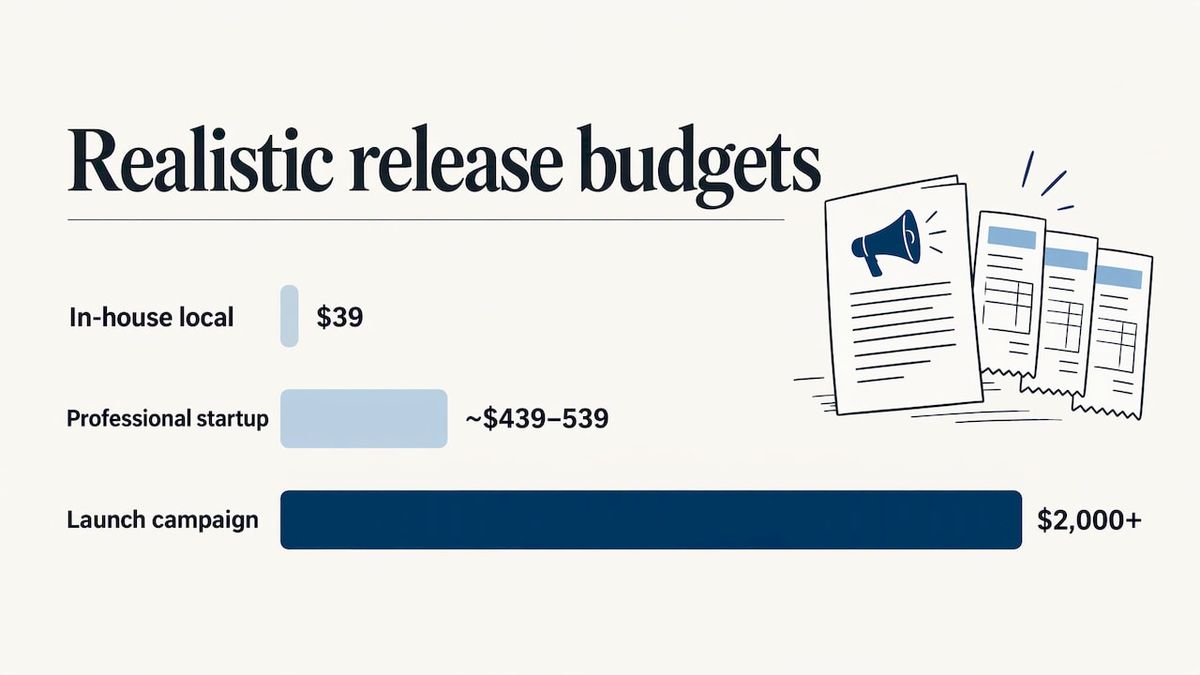
A local business announcing a new service, writing it in-house. Writing costs your time. Distribution through our Single Release is $39. Total cash cost: $39.
A startup that wants a professionally written launch release. A two-page release at AUD$400 to $500, plus $39 for distribution, is roughly $439 to $539 in total, before any GST on the writing fee.
An established company running a launch campaign. PR campaigns start from $2,000 according to the same report, with distribution a small portion of the total. The bigger spend here buys strategy and journalist outreach, not the release itself.
In each case the distribution fee is a small and predictable slice. The decisions that move your total are whether you write in-house and whether you need hands-on media relations.
Getting more from a fixed budget
- Make the release newsworthy first. A new product, a funding round, an award, a research finding or a community event is news. A routine update is not. Distribution only amplifies what is already worth reading.
- Add media. A sharp photo, a logo and a link to a full media kit make the release easier for a journalist to use.
- Pick the right category. Targeting the relevant category puts you in front of readers who care, which beats a broader and more expensive spread.
- Reuse the content. Link the published release from your website, your newsletter and your social channels. Our guide to sending a media release in Australia covers how to pair publication with direct outreach, and the one on publishing a press release online covers the web side.
- Track and learn. Compare engagement across releases, then adjust headlines and timing.
Publish with News Today
Our Single Release is $39 one-off. It is designed for businesses, agencies, startups and nonprofits that want to publish news quickly without a contract. You submit your release, it goes through our editorial review (instant or 24 to 48 hours), and it is published on our site and distributed with SEO optimisation, category targeting and media list delivery. Premium users also get performance tracking.
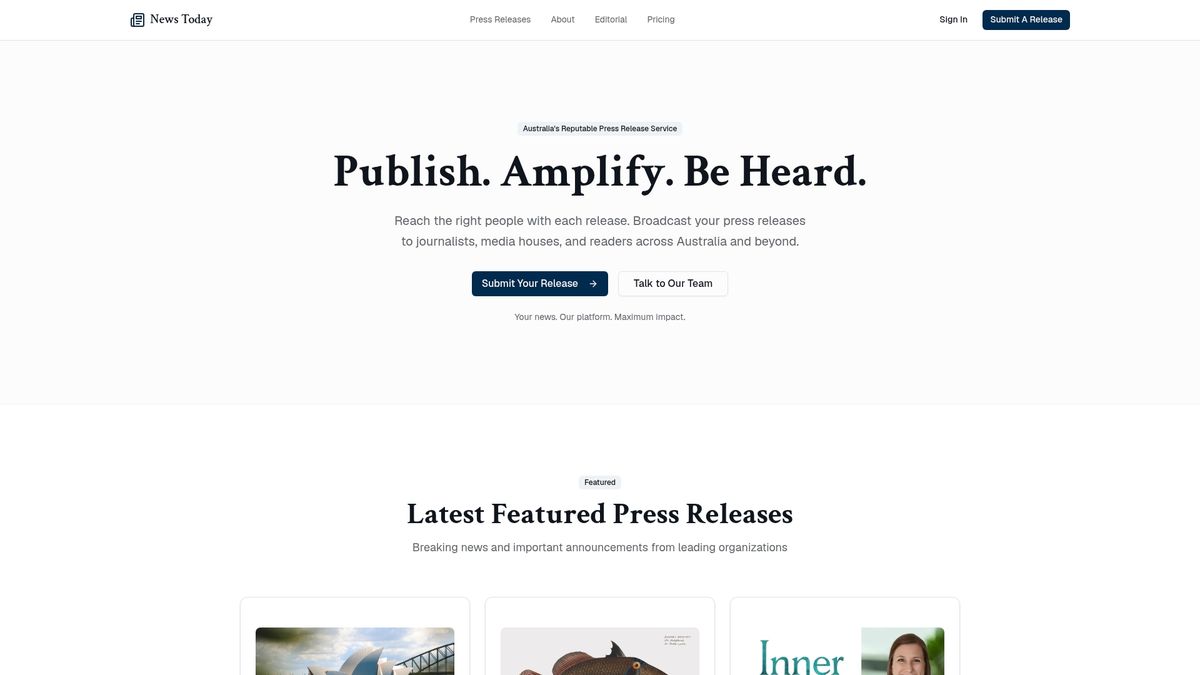
Agencies and frequent publishers can ask about bulk credits, and larger organisations can request a custom or enterprise package. See the current pricing options, or when your release is ready, submit your press release. You can also read how we run editorial review.
FAQ
How much does a press release cost in Australia?
It depends on what you include. Online distribution alone can cost a few dozen dollars, such as our $39 Single Release. Professional writing adds roughly AUD$400 to $500 for a two-page release according to Australian pay-rate data, and a full PR campaign starts from $2,000.
Is a cheap press release distribution service worth it?
It can be, if it gives you what you need: a live, searchable page, editorial standards and reach to your relevant audience. Check inclusions rather than headline price, and ask what is charged separately for images, targeting and reporting. A low fee for a news-worthy release often beats a high fee for a weak one.
Do I need to pay someone to write my press release?
Not necessarily. A clear structure with a headline, a lead paragraph answering who, what, when, where and why, a quote and contact details is achievable in-house. Pay for writing when the news is complex, the stakes are high or you have no time.
Should I choose pay per release or a subscription?
Choose pay per release if you announce news occasionally, since you only pay when you publish. Bulk credits or a subscription make sense when you publish regularly or manage several clients. Check contract length and whether unused credits expire before you commit.